

On a rainy Monday afternoon in early November, I drove to New Haven to meet with the managing archivist at the Yale Film Archive, Brian Meacham. Having never been to the Yale campus, I was struck by the incredible architecture of the Sterling Memorial Library. The nave where I met Meacham is rich with stained-glass clerestory windows and beautiful cloistered ceilings. We took the elevator up to Meacham’s office on the seventh floor. His office walls are covered in empty film reels and a vintage poster for The Wrong Box, a 1966 British comedy film starring John Mills and Ralph Richardson. Meacham spends countless hours in this room. Dressed in khakis and a plaid shirt, you wouldn’t immediately peg him as a film nerd, but as he talks about the lost history of our film heritage, his passion is contagious. The man sees in Technicolor.
“Yeah, well, I guess we’ll sort of never know,” Meacham said. “I mean, we won’t never know because a lot of the films have records of their existence, but we don’t have the films.” He sat at his cluttered desk and moved his hands as he spoke.

“The thing about nitrate is, yes, it is flammable and dangerous and combustible, but on the other hand, when stored properly, it can survive.” The type of film that most major films were recorded on up until the early 1950s had a cellulose nitrate base, which degrades quickly. When not properly maintained it can be highly flammable and burn without an oxygen source. While a great number of films have been lost simply due to lack of proper storage or vault fires, many others were intentionally destroyed by the studios that ran them. It was expensive to house the films, and after the silent era ended it seemed that they would no longer be necessary to archive. The United States Library of Congress estimates that 75 percent of all silent films are lost forever, and the Martin Scorsese’s Film Foundation believes that over 90 percent of films made before 1929 are irrevocably lost. “The films that we work on here aren’t necessarily films that anybody’s ever heard of besides maybe the filmmaker and the people who are in it,” Meacham said. “But bit by bit you’re adding back to this quilt of knowledge and the record of human existence.”
At Yale, many student films from the 1920s have been preserved. “Those are student films or amateur films made by Yale students who were really enthusiastic and interested in film when it was just at a moment where normal people could get film and make it themselves,” Meacham said, leaning back in his chair. “It captures life one hundred years ago, which is not through the lens of a newsreel camera or through a Hollywood camera. It’s just an amateur person sort of capturing their own life, about as close to someone just shooting on their iPhone as you can get from 1925.”
What these studio executives failed to foresee was the cultural relevance that these films carry, and how we can learn about an entire era of American life. The stories that we tell are a part of what defines our human history. If we fail to keep record of the tales we tell, how will we know who we are? As Martin Scorsese wrote on The Film Foundation website, “Our American artistic heritage has to be preserved and shared by all of us. Just as we’ve learned to take pride in our poets and writers, in jazz and the blues, we need to take pride in our cinema, our great American art form.”


Since the end of the silent era, many films that were thought to have been lost forever have been rediscovered in different locations all over the world. Before the digitization of movies, films had to travel from country to country to be screened. They were very valuable in their heyday, but once a film had run its course, it sometimes wasn’t worth it to send it back to its country of origin. The people holding the film would be told to destroy it, but sometimes they wouldn’t because of their appreciation for the film. They would then sit in some undocumented location for years until they would hopefully be rediscovered. Though the rediscovery of these films will never make up for the vast majority of films that have been lost, little by little we will be able to capture more knowledge of our film history as they reappear.
“The Passion of Joan of Arc was [found in a] mental hospital in Norway. [They] found the print, which is an amazing film,” Meacham said. “The fact that that print was stored in a closet in that mental hospital for years means that the world now knows that film in a much better way than just some crummy, censored, cut-down sixteen-millimeter print. It is quite a beautiful element, and it has allowed that film to become one of the greatest films of all time.”
“Bit by bit you’re adding back to this quilt of knowledge and the record of human existence.”
There are two different aspects to taking care of film: restoration and preservation. While restoration includes going through a film reel and repairing it, preservation has more to do with making sure that film is stored in cool, dry, and dark environments. Oftentimes it’s important to digitize these films as well, in order to translate it to a more current and lasting medium. Preserving film isn’t just about restoring movies to put back onto dusty library shelves, it means that they can be viewed and enjoyed. “The public screening is really where all of the work that you’ve done kind of comes to fruition, and enabling people to see a film that either they’ve never seen before or they’ve never seen look that good before, or they’ve never even heard of, that’s the thing that’s the most rewarding,” Meacham says. “That feels like you’re making one little effort in a larger cultural effort that the whole world is doing.”
On November 20, I drove back to New Haven to watch a Yale screening of The Lady Eve, a screwball comedy from 1941. The Yale Film Archive hosts multiple film screenings throughout the year in three different venues on campus, which are free and open to the public. It’s very rare to be able to see an actual film on film outside of major cities like New York, Boston, Los Angeles, or Chicago nowadays. Here at Yale, their goal is to give people the opportunity to witness a form of art.

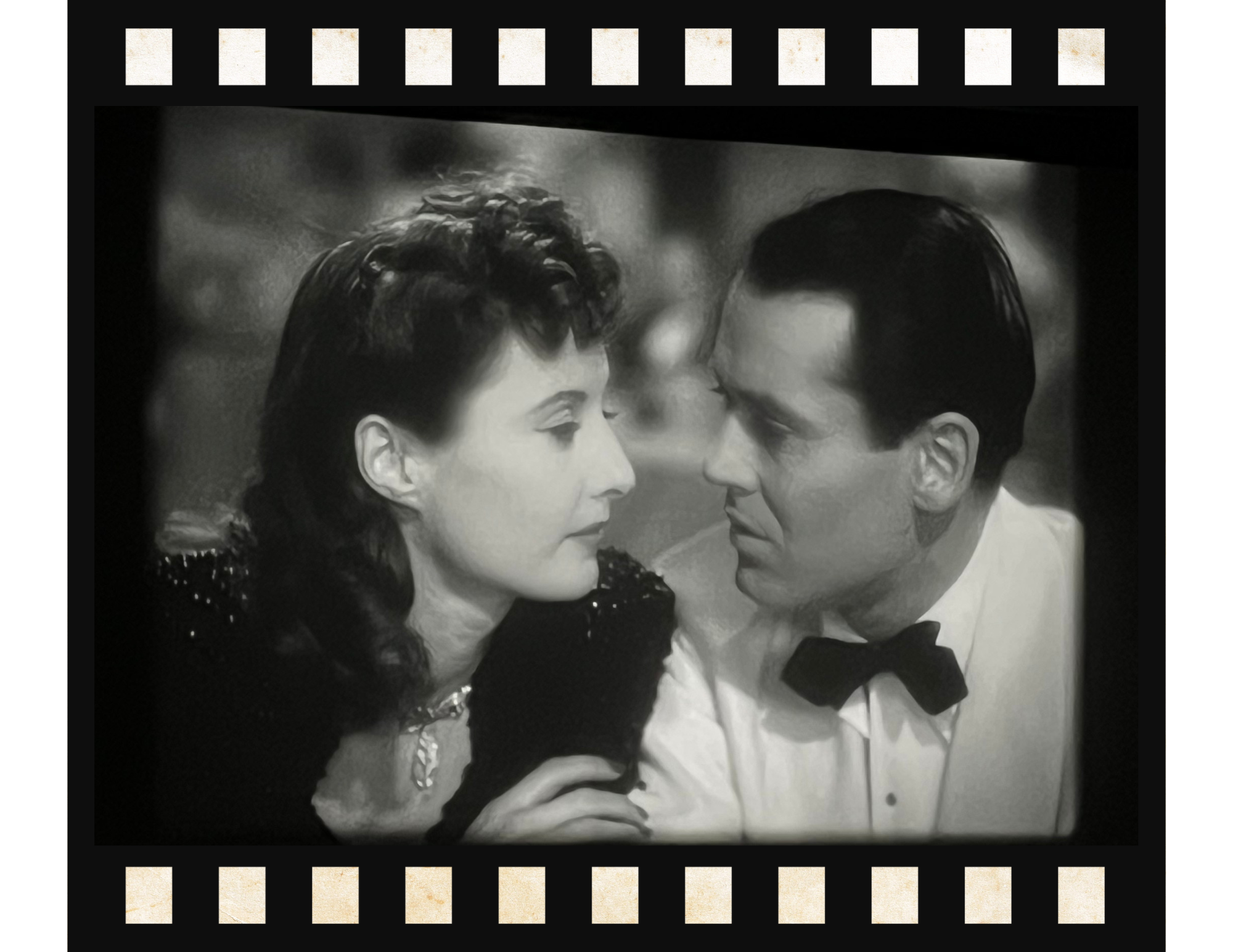
One hundred five people of all ages filled the screening room on the lower level of Yale’s Humanities Quadrangle. Brian Meacham walked up to the podium and gave some background on the film. This movie, starring Barbara Stanwyck and Henry Fonda, was being screened as a part of the Yale Five for Fonda series. As the lights dimmed and the chatter calmed, we watched as a cartoon snake slithered onto the screen and plucked apples with the words The Lady Eve printed on them. Laughter rose across the room as Fonda tripped on screen and Stanwyck made quick-witted remarks.
“When I was little, my dad would take me to film restorations at UCLA,” said Kitty Robinson, an audience member. “It made a really big impression on me and gave me a love of older films and [an] appreciation of history. So I enjoy them anyway, but I especially like to look for ones that my eight-year-old daughter might enjoy and sort of give her that same feel, because it felt so special to go out with my parents and see these old movies.” She holds the hand of a little girl with a big blue bow in her hair and smiles.

In a day and age where we have the ability to record our moments with the touch of a button, it’s easy to lose sight of the fact that things weren’t always this way. When people recorded things, they had to be deliberate, they couldn’t just click delete and start over. Many people in the future won’t be able to say that they’ve ever actually seen a movie on film, as movie theaters digitized all of the movies streamed by the mid-to-late 2010s. Preserving film is about preserving our history and culture. Though the world has moved on to digital everything and AI deepfakes, it’s important to keep a record of the art that brought us to where we are today.
Featured Image: The Lady Eve (1941) Film Frame / Photo Credit Hannah Nystrom
0 comments on “Film Restoration: Preserving History in a Digital Age | Hannah Nystrom”