

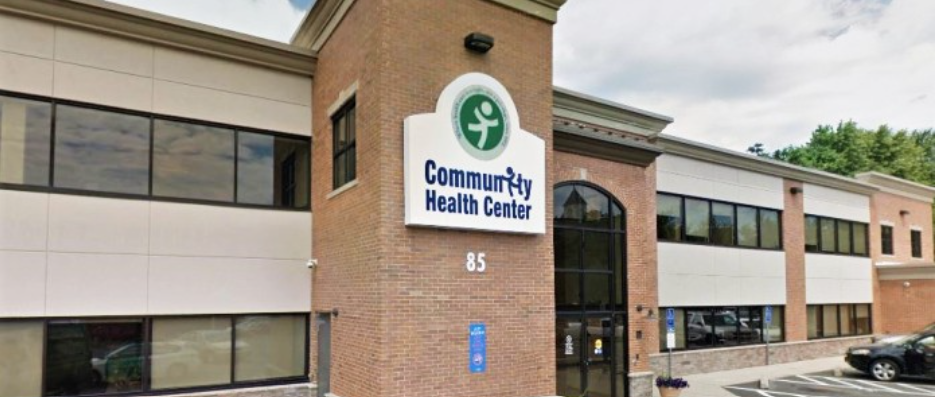
The Community Health Center (CHC) of New Britain is filled with the sound of typing, children’s laughter, soft chattering of patients, and the drone of the waiting room television. The sunlight through the large open doorway dapples on the carpeted floor, warming the large waiting area. Vice President of the Community Health Center’s eastern region, Yvette Highsmith, steps into the waiting room and leads me to a small conference room upstairs from the exam rooms. Highsmith is tall, wearing a luminescent tan jacket over a plum-colored dress. Her funky cow-print belt is visible when she reaches to open the door, her jacket shifting with the movement of her arm.

“This is my thirtieth year working at Community Health Center,” Highsmith says. Her journey started as a social worker, aiding young women through their pregnancy and motherhood. “My first year with the organization was in 1994,” she adds with a bright smile. The New Britain location was established in 1996, twenty-four years after the original Middletown location began providing care to children, the uninsured, and the local immigrant population.
It should come as no surprise that healthcare is in the forefront of the voter’s mind. A September 2024 poll by Gallup and West Health, a network of nonprofit and nonpartisan organizations, found, “Nearly eight in ten U.S. registered voters say healthcare is an extremely (37 percent) or very important (42 percent) issue to their vote in this year’s presidential election.”
The Biden administration has supported the initiatives and insurance exchanges created by the Affordable Care Act, as well as passing the American Rescue Plan Act and the Inflation Reduction Act. These bills have lowered the costs of prescription medications and health insurance premiums. A recent Biden achievement was negotiating the reduction of insulin prices.
Although there has been no word of a specific health plan, former president Donald Trump has tried repeatedly to repeal the Affordable Care Act. During his presidency, Trump signed the No Surprises Act into law, which protects patients from unexpected and price-gouged medical bills. Additionally, he enacted an executive order to enforce price transparency for medical services. Vice President Kamala Harris has spoken about her plans to build upon the bills enacted by both the Biden administration and policy changes made by the Trump administration.
The Community Health Center began as an idea in 1971, in which founder Mark Maselli noticed the health disparity in his hometown. Residents of Middletown and a group of Wesleyan students worked with Maselli to open Middletown’s first free clinic, facing many challenges along the way. In June 1973, thirty private doctors signed a complaint that CHC was not following state guidelines for healthcare centers. Inspectors found that hallways were too narrow by just one inch, resulting in the CHC receiving a cease and desist order and temporarily putting them out of business. Another constant battle they face is securing adequate funding.
“There aren’t options for us like there are for other people.”
The CHC is a federally qualified health center, meaning the government provides medically underserved communities, such as New Britain, with a Community Health Center. The New Britain location alone serves about twenty-two thousand patients.

“The majority of our budget comes from third-party reimbursement,” Highsmith says. “About 60 percent of our patients are on Medicaid.” Providing care for the uninsured consumes nearly 70 percent of their budget. Although there hasn’t been a drastic change in funding with different administrations, federal- and state-supported health care centers still face challenges. “Every year we go to the capital, constantly fighting for it, showing the data, showing our elected officials the impact of federally qualified health centers, and the benefit of folks having equitable access to good health services.”
Despite being distributed by the government, CHC funding is not tied to inflation. “If Congress doesn’t keep the allocation up with inflation and rising costs, then we’re always at this battle of trying to figure out how to do more with less.” Healthcare is a highly supply-driven business run by for-profit companies. The cost of supplies from surgical gear to vaccines increases each year. Without these essential supplies the CHC would be unable to function.
Lisa is a middle-aged single mother and social worker of two who has relied on CHC care for twelve years. She wears a burgundy sweater, her work identification badge clipped to the front of her pants swings side-to-side as she walks to her office. She stresses the importance of the accessible health services for her family. “Being a mom, I’m doing it by myself, you know,” she says. “There aren’t options for us like there are for other people.” Although Lisa is insured, her income is below the federal poverty line, meaning her options for insurance that do not require out of pocket pay are limited. Fortunately Lisa qualifies for state insurance.
Without community health care providers, patients like Lisa would seek out emergency care and lose relationships with healthcare providers. “They would probably be in the waiting room of emergency departments with significant health issues that were not attended to from a preventive or proactive lens,” Highsmith says. “One of the reasons I’ve been here for thirty years is the fundamental belief that healthcare is a right and it’s not a privilege, and that everyone should have access to affordable, culturally aware health services that are delivered in a manner that conveys dignity and respect.”
CHC continues to serve the growing immigrant community in New Britain. “40 percent of our population is Spanish speaking,” Highsmith begins. “It’s largely folks who are from Puerto Rico.” CHC’s second largest population are Polish speakers, followed by Arabic, although treating non-English speakers is a challenge for CHC, faced by using a phone-based translation system that is capable of accessing 179 different languages and dialects.
“Hundreds of thousands of dollars a year we spend on that translation system. It’s priceless in the sense that a family that walks in here that speaks Mandarin Chinese, we can get somebody on the phone, and they can complete the visit exactly in their language of choice.” An added benefit of the translation system is that children aren’t expected to shoulder the burden of translating complicated medical jargon for their parents.
In fact, about two-thirds of patients at New Britain CHC are under the age of eighteen, as Highsmith works on CHC’s school-based health services. “Our organization’s philosophy is to deliver care wherever our patients are. Kids spend most of their day in schools, and all of the research shows that healthy kids are better learners, right? They’re not in pain, they’re not uncomfortable, and so they can focus on learning.” CHC offers comprehensive healthcare services at every school in New Britain. This includes dental, medical, and behavioral health, as well as free clinics in the building. Children are one of the most vulnerable demographics, with Highsmith believing, “Removing the barriers for access to care is just really important.”
“The healthcare system of the United States was not really designed with equity in mind.”
“I’m hopeful that Connecticut’s elected officials, Connecticut’s senators and congress people will continue to have the pulse on the needs of Connecticut residents and continue to show up in Congress with legislation that supports the best quality of life for every resident.” Connecticut leadership has listened to the needs of their communities, particularly medically underserved communities that benefit from a Community Health Center.

Navigating the U.S. healthcare maze is stressful, especially for non-English speakers unfamiliar with our system. “Different communities view health differently. [I believe] that the healthcare system of the United States was not really designed with equity in mind,” Highsmith concludes. She folds her hands on the conference room table. The clock on the wall ticks to the cadence of Highsmith’s speech, punctuating each word. “We view ourselves as disruptors of a system that was designed not to foster health for everyone.”
Samantha Barrows is a staff writer for Blue Muse Magazine.
Header Image courtesy of Rehab.com
0 comments on “Healthcare Disruptors: Community Health Center’s Uphill Battle to Provide Accessible and Affordable Healthcare | Samantha Barrows”