

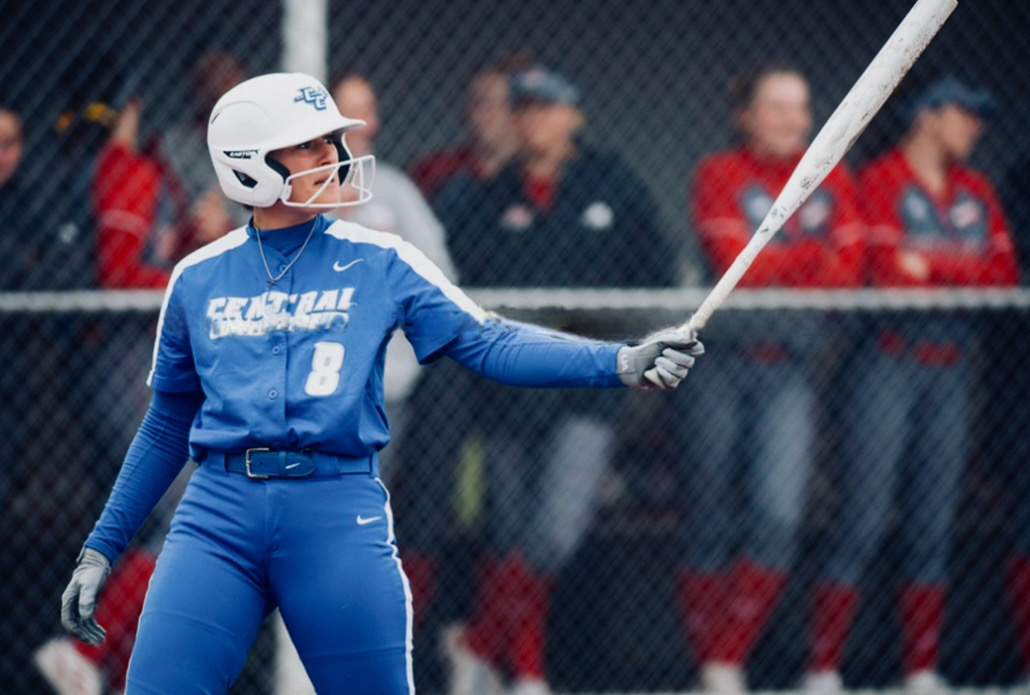
On October 26, 2024, during an intersquad scrimmage at the Central Connecticut State University softball field, I rapped my second single into right field. It felt like a typical fall day. The skies were clear, and the turf was baking. It was the fourth inning. I was 2-for-3, catching well, feeling like myself. I stood on first base, heart racing, waiting for the next sign. Then my coach gave the signal: steal.
The pitcher gets the sign from the catcher and starts her pitch. My eyes were on second base. I already knew the slide I wanted to do. Once she released the ball, I blasted off from first. The ball was caught and thrown to second. The shortstop, covering the bag, came down hard with the tag, and her glove hit my face. My metal cleat snagged the turf—just a tiny catch, but enough to hold my foot. My leg stopped while the rest of my body kept moving. My knee twisted, a horrifying 360 degrees. My body was in shock and did not feel pain right away. I hopped up and instantly knew something was wrong, but years of telling myself to “just be tough” kicked in. I didn’t become a Division One athlete by quitting. My coach walked over and asked if I was okay. I said yes and ran off the field as I was tagged out.
I ran halfway, and the pain hit so sharply that my vision blurred. My stomach dropped. My heart pounded. Yet I kept practicing until I was told to stop. For months after, the answer from my doctors was always the same: an MCL strain. “You’ll be fine in a few weeks.” But my body disagreed. I pushed through workouts and lifts even though something told me to stop. Then one morning at team lift, as I sat down on the floor to do a bench press, I felt a deeper pop. A feeling like a rubber band stretched so far apart that it snapped. I laid down, ignoring the pain, and continued my reps.
The MRI results came on Thanksgiving morning: my meniscus was torn to shreds. I stared at the words as tears fell onto my phone. I faked a smile at Thanksgiving dinner, not telling anyone and pretending everything was normal, while inside I felt lost.

A few days later, my dad and I drove to Connecticut Orthopaedics in Branford, where my surgeon, Dr. Patrick Ruwe, reviewed my MRI. His experience told me my situation was serious; he had worked as a team physician at Yale University and trained at the Kerlan-Jobe Orthopaedic Clinic in Los Angeles, treating professional athletes. I walked in hoping for reassurance. Instead, Dr. Ruwe gently shook his head and told me there was too much damage to repair without surgery. My dad hugged me and whispered, “everything is going to be okay.” I wanted to believe him, but instead I sat in my car for nearly two hours crying. My surgery was scheduled for December 17.
Returning to campus, I told my teammates I was out for the season. The words felt trapped in my throat. I could not focus during the day at school, and could hardly fall asleep at night. What if I lose everything? What if I never catch again? That night in my dorm, I dropped to my knees in tears. God, why would you let this happen?
“If I tear my meniscus and never play again, am I still me?”
Surgery came fast. Bright lights, cold air, nurses everywhere. My dad stayed with me until the last possible moment. Dr. Ruwe explained two possible outcomes before going into surgery: a small white patch and a short recovery, or a long black brace and a year-long recovery. As the anesthesia entered my bloodstream, I prayed that whatever happened would somehow make sense.
When I woke up, I looked down to find a long black brace cuffed to my leg. I cried instantly. My season was gone. Silence filled the room. My identity, my routine, everything I worked for was suddenly over.
After Christmas break, I returned to campus before classes to be with my team. When they opened their new cleats and gear, the room filled with excitement. I stood on the softball field on crutches. When the cheers got louder, I slipped behind the bench and cried. Fans, teammates, coaches, parents, they see the brace, the swelling, the limp. What they don’t see is the fear, the identity crisis. The field I once felt so connected to suddenly felt like a place I didn’t belong.
I was not alone. The NCAA Injury Surveillance System, which tracks injuries across colleges nationwide, reports that college athletes sustain tens of thousands of injuries each year, with lower-extremity injuries the most common in nearly all sports. The surveillance reports showed high rates of knee injuries—especially in women’s sports like soccer, basketball, and softball—where noncontact twisting injuries, like mine, appear often in the data. Many of those injuries require surgery, months of recovery, or even prevent athletes from returning to their previous level of performance.
I was in a brace for months, then was able to remove it. But then, with six weeks on crutches. When I saw the scar for the first time, I almost laughed. That’s it? After everything—the pain, the MRI, the panic, the surgery, peg leg—it was just two small purple scars on each side of my knee. My coach even joked, “let’s go get the gear on.” As much as I wanted to, I was still in pain and not even close to being cleared.

I started rehab five months after surgery. I did athletic training every day—mile runs, leg press, resistance bands, deep squats, Russian stim, and bending my knee farther. Some days, I cried before PT; some days, after.
At Central Connecticut University, we’re fortunate to have athletic trainers, strength coaches, mental health staff, and academic support. Yet even with all of that, the mental burden is heavy.
Dr. Michael Voight is a Central professor with a background in sports science and a master’s degree in guidance counselling, with nearly twenty years of experience working with college athletes. During my conversation with Dr. V in his office, I learned that what I went through is not rare. “For years, the body was always there. You never had to question, and then it failed.” That sudden loss of trust, he explained, leaves athletes feeling “broken from a physical standpoint but fractured too from a mental [standpoint].” He sees the same cycle in injured athletes: grief, disbelief, anger, and fear. “Some athletes lose confidence, they lose trust,” he said. “Stress follows them from class to practice, from practice to games.”

The emotional fallout often comes before the injury itself. “There are certainly many student athletes who are actually predisposed to get injured because of not being able to manage their stressful lives. They bring that life stress on the field, on the court. When your focus, your confidence, your emotional state is already shaky, your risk goes up.”
Dr. Voight is a huge advocate of daily journaling. “I don’t mean just writing about what happened. I mean, having an entry that just kind of spits out all the negative self-statements. If you didn’t feel like going to rehab that day, what were those most pervasive thoughts that were holding you back?” That type of awareness, he explained, “will certainly improve [the athlete’s] confidence and motivation.”
He emphasized self-belief. “The more you can embrace the positives, giving yourself credit for little successes, the stronger you become. No one’s going to give you confidence but yourself. It has to come from within.”
Recovery wasn’t easy. It was an endless cycle of therapy sessions, doctor appointments, and hours spent trying to bend my knee. I cried more than I ever had—from the pain and the fear that I might never be the athlete I once was.
“For years, the body was always there. You never had to question, and then it failed.”
My body changed. I returned seven months after the injury, thinner and weaker. In my summer league, the 23U Rapids, we played every Sunday, but I wasn’t allowed behind the plate. I sat on the bench feeling like a ghost. I remember crying to my dad after one of those games, telling him, “I don’t think I’m ever going to catch again.” He pulled me close, telling me we would figure it out. He encouraged me to talk to my physical therapist.
Later that week, I was in my physical therapist’s office talking through my fear. My physical therapist promised they would do everything they could to get me back, but I had to work for it. That conversation pushed me to fight harder.
I trained harder than I ever had. I bent my knee deeper, squatted lower, rebuilt the strength I thought was gone forever. Slowly, painfully, I started catching again in my summer games. Each inning brought a piece of myself back.
I heard Dr. Voight’s words differently when I started having flashbacks of my own injury—the stage of recovery he called the turning point. “I won’t tell an injured athlete on day one that this happens for a reason. But in time, there usually is a silver lining. Athletes just don’t see it early.”
He explained that when athletes are forced to slow down, “you develop parts of yourself you didn’t know were there: patience, resilience, maturity. That’s where the silver lining hides.”

A whole year has passed since my surgery. I am cleared to return to practice, lift weights, and play in games. I am enjoying the rhythm of being an athlete again. Every minor pain in my knee reminds me how far I have come. It will follow me for the rest of my life.
This injury taught me not to rush, not to ignore my body. Now I think about everything I have gained, not just what I lost. I have learned that confidence comes from within.
My silver lining was there all along. I just needed to push through the pain to see it.
Featured Image: Kendall batting against Sacred Heart / Photo Credit Kendall LaMorte
0 comments on “Life on the Sidelines: The Hidden Battle of Injured College Athletes | Kendall LaMorte”