

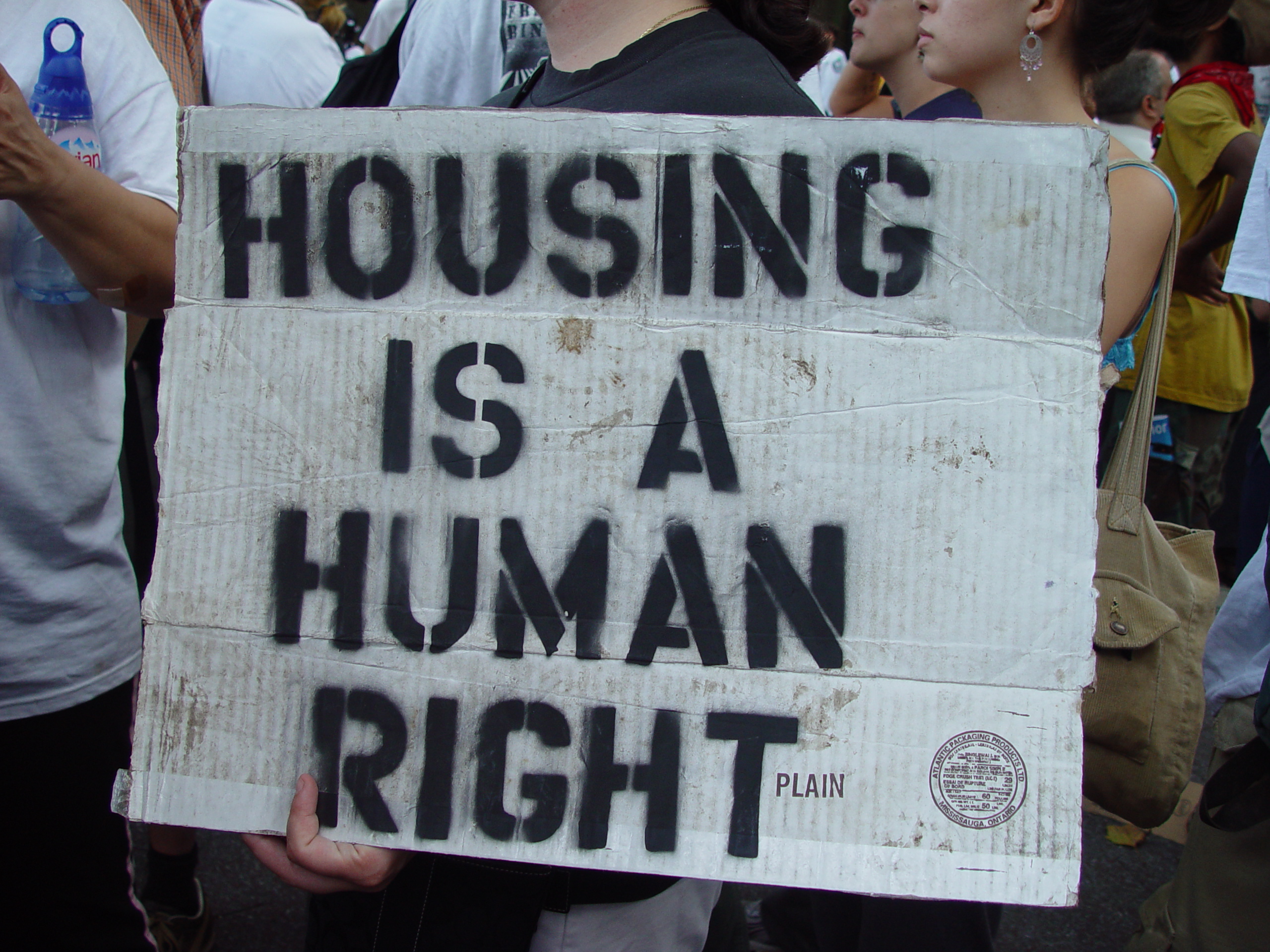
President Donald Trump updated the nation on the state of affordability during his February State of the Union Address. He proclaimed, “Today our border is secure, our spirit is restored, inflation is plummeting, incomes are rising fast, the roaring economy is roaring like never before.” Fast forward six weeks, and the war in Iran has driven up gas prices by over 20%, while 30-year mortgage rates have risen over 6%. The war effort drives up the national debt by a billion dollars each day. Housing costs are a major anxiety for Gen Z voters. The President’s claim that “the annual cost of a typical new mortgage is down almost 5,000 dollars” is already underwater.

Young people don’t share the president’s optimism. “When I think of affordability, I mostly think of being able to live with some sort of comfort on a minimum wage job,” said Amber Monzillo, a junior at Central Connecticut State University, who wore an oversized black hoodie with a vibrantly colored beetle on the front. In the student government room, she admitted that, “we’ve always sort of lived paycheck to paycheck.” This lifestyle is not roaring.
Affordability is a huge concern to Gen Z voters. A Harvard youth poll done in Fall 2025 found that out of 2,040 young Americans, 43% say they’re struggling to make ends meet. For most Gen Z voters, the economic hardships play a substantial role when they go to the polls in the midterm elections. High costs, inflation, and stagnant wages cause young people to worry about their futures and politics. In a New York Times article discussing the experiences of Gen Z workers, a twenty-eight-year-old named Tope shared, “Hustle culture is having to work overtime to afford basic necessities. And I don’t think it’s sustainable long term for people. I just think that we’re meant to be more than our jobs.”

Professor Paul Petterson, a political science professor at Central Connecticut State University, agrees with Monzillo that people should be guaranteed a roof over their heads. This goal is difficult to achieve as housing prices continue to rise. He explained how a politician’s definition of affordability oftentimes becomes oversimplified, focusing mainly on gas prices or the price of eggs. Although those pocketbook issues exist, they shroud the overriding problem of housing affordability: “If you don’t have somewhere stable to live, everything else becomes hard.”
And it certainly is hard. When I asked Monzillo the first word that came to mind when thinking about buying a house, she responded, “Debt.” Like many of her generation, she still lives with her parents. There’s a belief that living with one’s parents should help with saving money, but that is far from reality. In Monzillo’s case, she still has car payments, insurance, and sometimes groceries, barely making ends meet while working part-time at Designer Shoe Warehouse.
“Their wages over time have not kept up with the cost of everything else,” said Professor Petterson. During the last 50 years, the relative wage growth has only gone up a small percentage for most. Meanwhile, CEOs and other people at the top of the economic ladder find their salaries to be increasing at a rapid pace. For the common man, housing becomes unaffordable as wages remain stagnant.
Niccolo Conte, writing for Visual Capitalist, notes “America’s median home price-to-income ratio has risen from 3.5 in 1985 to 5.0 in 2025.” This means that the wage needed to purchase a home has increased, making it impossible for a middle-class American to own a home. In 2025, the median American home price was around $416,900, which is five times the median household income of $83,150. The large increase in housing prices makes it difficult for the typical American to buy a house.
“Even if I am making good money, I still have to pay off these debts. And, you know, what if it’s not enough?”
Part of the struggle is a disconnect between generations. Monzillo is uncertain of her financial future. “You should have a savings account for emergencies, but you can’t. You need the money right now, and that’s what makes it difficult.” She plans to go to law school, but she admits to worrying about student loans. “Even if I am making good money, I still have to pay off these debts. And, you know, what if it’s not enough?”

Everything feels like it costs more these days: water, electricity, groceries, wifi, transportation. It all adds up. William Dunkelberg, Chief Economist for the National Federation of Independent Business, explains in their research blog how, although companies are trying their best to produce more and lower the costs of their products, the rise in housing makes everything else “unaffordable.” In other words, if housing is difficult to afford, every other bill is also going to be perceived as unaffordable. Housing is the core of the affordability problem.
During our discussion, Professor Petterson discussed the K-shaped economy through the lens of economic analysts. “If you have assets, if you own a house, if you have investment assets, et cetera, your economy is going one way and has been for a while. If you don’t, if you’re just renting, your economy is much more fragile.” This economy makes it difficult for people to break out of the cycle of unaffordability. Yet some politicians and educators assume that the problem is that young people are spending on luxurious items. In reality, that’s not what Gen Z is doing. The problem isn’t their spending habits; the problem is the increase in costs along with the stagnant incomes. As a result, the bare minimum (of owning a house) is difficult to achieve.
Unfortunately, the economic hardship has been building up for a while. Starting in the mid 70s, the post-war boom that created a thriving middle class began to crumble. South Plains economist Owen Rust writes in The Collector that inflation rose between 1965 and the early 1970s as a result of increased government spending during the Vietnam War. Thus, the Vietnam War era came to be known as a period of high demand-pull inflation: the high demand for goods, combined with the lack of goods, increased prices. This also led to a rise in oil prices in 1973. From this point forward, the economy has left the average American fighting for financial stability. Now, Gen Z is forced to deal with the extreme culmination of the K-shaped economy: an economy that allows wealthy individuals to thrive while lower-income individuals are trapped due to inflation and stagnant wages. Professor Petterson made it very clear how harmful this is. If your wage is barely moving, then “you’re flatlining.” As he said this, Professor Petterson’s hands slapped the desk to emphasize the point.
Gen Z voters want change. But will they get it?
So naturally, Gen Z voters want change. But will they get it? Harvard Youth Poll found that most young Americans lack faith in national leadership. In fact, 40% of respondents said something negative about both political parties.
Monzillo can attest to that. She believes that the current administration hasn’t been good at addressing affordable housing. “I think both parties need to work on how they’re addressing it because it has to be real systemic change, you know? It can’t just be throwing a Band-Aid on something.” It all seems to be promises rather than any form of action. The Senate recently passed the Housing for the 21st Century Act. This bill aims to increase housing supply by cutting federal compliance costs, putting more finances towards affordability projects, and removing outdated housing rules. As beneficial as this bill is, the process towards enactment is incomplete. Although the Senate has passed its version, the House must now decide whether or not the bill is substantial enough to be sent to President Trump.
The absence of action is frustrating to Gen Z. Professor Petterson surmises that young people are tired of policy speeches that aren’t going anywhere. The White House’s approach to policy has usually been to give out a small amount of money per year as a tax credit for all Americans. This policy shows that politicians are aware of the affordability issues, but still fail to address the primary issue of housing. “The president has talked about some kind of housing support or housing policy, but as of yet, there’s been nothing conclusively put on the table.” Professor Petterson recommends that the minimum wage should be pushed up to help people afford housing.
So, what does this mean for youth voter turnout in the midterms? Does the lack of action weaken voter engagement or enhance it? Monzillo believes Gen Z voters “should be thinking about which candidate is going to help us reach that goal of owning a house someday.” When they fail to connect with either candidate, they simply choose not to vote at all. According to the CIRCLE Post-2024 Election Youth Poll, “the most commonly cited reasons why youth did not vote were because it wasn’t important to them (20%) or because they did not like any of the candidates (24%).” Instead of voting for the lesser evil, Gen Z remains silent on the issues that affect their day-to-day lives.
It is safe to say that voting is better than abstaining.
Professor Petterson knows people who have more at stake tend to vote more. And an election can be decided by a single vote. “I wish everybody had tremendous enthusiasm to go out and vote because I think we’d have a different country in a different world then.” In 2002, Democrat Grace Scire won a congressional election in Connecticut by only two votes. Thus, it is safe to say that voting is better than abstaining. A single vote can make a difference.
Active participation in the process can create change. Gen Z needs to have conversations with one another. “Getting out there, doing outreach with people, spreading awareness,” Monzillo said, sitting up at the table. “I think that’s the way we really get people to become more civically engaged and vote.” Conversations will help people stay informed about current events. For example, the ongoing attacks on Iran come with many economic drawbacks. Writing on the PBS website, Christopher Rugaber notes how natural gas prices have increased recently “as roughly 20% of the world’s gas travels through the Strait of Hormuz and a liquid natural gas plant was shut down in Qatar.” This action could also raise heating prices in the U.S. Purposeful voting will occur once people become more attentive to current events.
There are roughly eight months till the 2026 midterm elections. According to Professor Petterson, “that’s an eternity in politics.” Whether it be related to affordability or not, current events and the unpredictability of the current administration should motivate Gen Z to head to the polls come November. If it feels like both sides are inadequate in meeting your expectations, engage in the process to make a difference. Professor Petterson believes youth voters have the power to create real change. People should be “willing to act on that belief by going out and voting and supporting people who really want to meaningfully say, ‘No, this has to change.’” If Gen Z doesn’t vote now, their voice might become unaffordable. Go out and take a stand towards a sustainable future.
Feature Image / Photo Credit Jonathan McIntosh, CC BY 2.5, via Wikimedia Commons
0 comments on “Why Is Everything So Expensive? Youth Voters Want Action on Affordability | Angelica Szczygla”