

On September 26, Western North Carolina was hit with the deadliest tropical storm in the state’s history. A 100-year event of water and mud devastating communities in the Blue Ridge Mountains. Massive rainfall cascaded down on already wet land. After two days of rain the French Broad River crested at twenty-four feet surpassing its highmark. Kayak outfitter Woody Callaway who lives along Green River told NPR, “I’m looking at the river, which was once 50 feet maximum wide. [Now] it’s at least six, seven hundred feet wide.” The booming arts city of Asheville will take years to recover.

The destruction and death of hurricane Helene didn’t stop Mother Nature. Another named storm formed in the Gulf of Mexico. Hurricane Milton hit Florida’s western coast as a Category 5 hurricane only two weeks later. Cities from Tampa to Fort Myers issued mandatory evacuations. Bridges were closed to the barrier islands. Two storms in two weeks. An estimated 300 billion in damages. And tragically, a combined death toll of 250 people.
Warm weather and rising ocean temperatures is the main driver of hurricanes and with global temperatures becoming hotter every year, we’re going to see a lot more of it. Hurricane Helene started in Florida but held so much moisture that by the time it reached North Carolina, it continued to pour on the Western Appalachian. The North Carolina Forest Service’s RAWS station in Busick recorded a three-day accumulation of 31.33 inches.
The year 2023 was the hottest in recorded history. Glaciers are melting. Sea levels are rising. Droughts are depleting crops. The list goes on, and young voters have had enough. The 2024 election is days away and one of the leading concerns with youth voters is what the candidates are doing (or not doing) to address the crazy weather patterns created from the human impacts on the environment. A 2023 survey by Tufts Circle Center for Civic Learning and Engagement reported, “seventy-two percent of young people who chose addressing climate change among their top three issues said they’re extremely likely to vote in 2024.” Climate has become a huge crisis in recent years with severe storms and heat waves, “nearly three in four youth say their communities have already experienced related events like unusually high temperatures, droughts, or floods.” The candidate’s policies will affect how world leaders work to keep CO2 levels from rising much faster.
Trump is known for his “Drill, Baby, Drill” mantra, and saying that climate change is a hoax. He pulled the United States from the Paris Agreement, a global agreement of the United Nations Climate Convention working to prevent global temperatures from rising. Vice President Harris says she will rejoin the Paris Agreement and is more willing to acknowledge the problems caused by rising temperatures. She will also continue policies of the Biden Administration to lower C02 emissions such as the Build Back Better Act which has dedicated billions of dollars for clean energy and climate change proposals.
“We knew there would be rain and flooding, but nothing at all as catastrophic as what came.”
However, we all know humans are not going to stop driving cars and burning fossil fuels in the near future. Here’s a simple breakdown of one of the central issues affecting the health of our planet. Rising sea levels and warming oceans due to climbing global temperatures.
The ocean plays a big role in controlling climate. It has a system of circulating water. Starting in the North Atlantic, the cold salt water eventually sinks to the bottom, drawing in warm water from the south which cools down and sinks. The water eventually rises and the cycle continues on. This is called the Atlantic meridional overturning circulation and there would be a lot of negative effects if it were ruined. New Yorker reporter Elizabeth Kolbert wrote in a recent article, “Heat would build in the Southern Hemisphere. Global rainfall patterns would shift, storms in the Atlantic would become more destructive, and warm water would pile up on the shores of the eastern U.S., leading to rapid sea-level rise.” Kolbert visited Greenland and on her trip met a scientist of ice dynamics named Marco Tedesco. Together, they went on a trip to see the Russell Glacier. What was once a wall of ice has now melted down to a deflated looking glacier.
Sea levels have risen around nine inches since the 1800s. Rebecca Lindsey, a writer for the National Oceanic and Atmospheric Administration (NOAA), wrote in a 2023 report, “The global mean water level in the ocean rose by 0.14 inches (3.6 millimeters) per year from 2006-2015, which was 2.5 times the average rate of 0.06 inches (1.4 millimeters) per year throughout most of the twentieth century.” The rise in sea levels causes issues for anyone around the world who lives near the coast such as flooding, shoreline erosion, and devastation to marine habitats. This also affects local businesses, infrastructure, such as bridges, drinking water supplies, and sewage treatment plants.
But what is making the glaciers melt? Humans. The big start to global warming was the Industrial Revolution in the mid 1700s. The boom of factories, transportation, and home heating along with the acceleration of deforestation, all emitted C02 into the air at a rapid pace. After the second Industrial Revolution, beginning in the late 1800s, the emissions continued to increase immensely. The NOAA studies have found that the carbon dioxide levels have doubled compared to pre-industrial levels. And today, we burn more fossil fuels.

The rising sea levels also push destructive hurricanes further inland. Not only does man-made global warming affect the water level, but it also causes more severe hurricanes. The ocean water is getting warmer which means an escalation of evaporation. As the storm starts to build over warm water, the more it will take in which leads to stronger winds, heavier rainfall, and flooding. The Environmental Defense Fund states, “How fast hurricanes intensify has also increased in the Atlantic since the 1980’s due to climate change. Hurricanes Dorian and Milton are prime examples. Both rapidly intensified close to landfall, making it harder to predict the potential danger.”
Graham Averill has lived in Asheville for twenty years and never expected a storm this big to hit his city. He woke to howling winds and trees falling, worrying if one was going to fall on his house. The power goes out, water has shut off, and cell service is lost as winds are still whipping. Averill wrote of his experience in Outside Magazine “Nobody expected a storm like this in western North Carolina. Hurricanes usually hit the state’s coastal regions, not the mountains. We knew there would be rain and flooding, but nothing at all as catastrophic as what came.” Two weeks have passed and Averill still has no running water or electricity. Businesses have either been swept away or are knee-deep in mud. Folks are determined to rebuild, though it will take years.
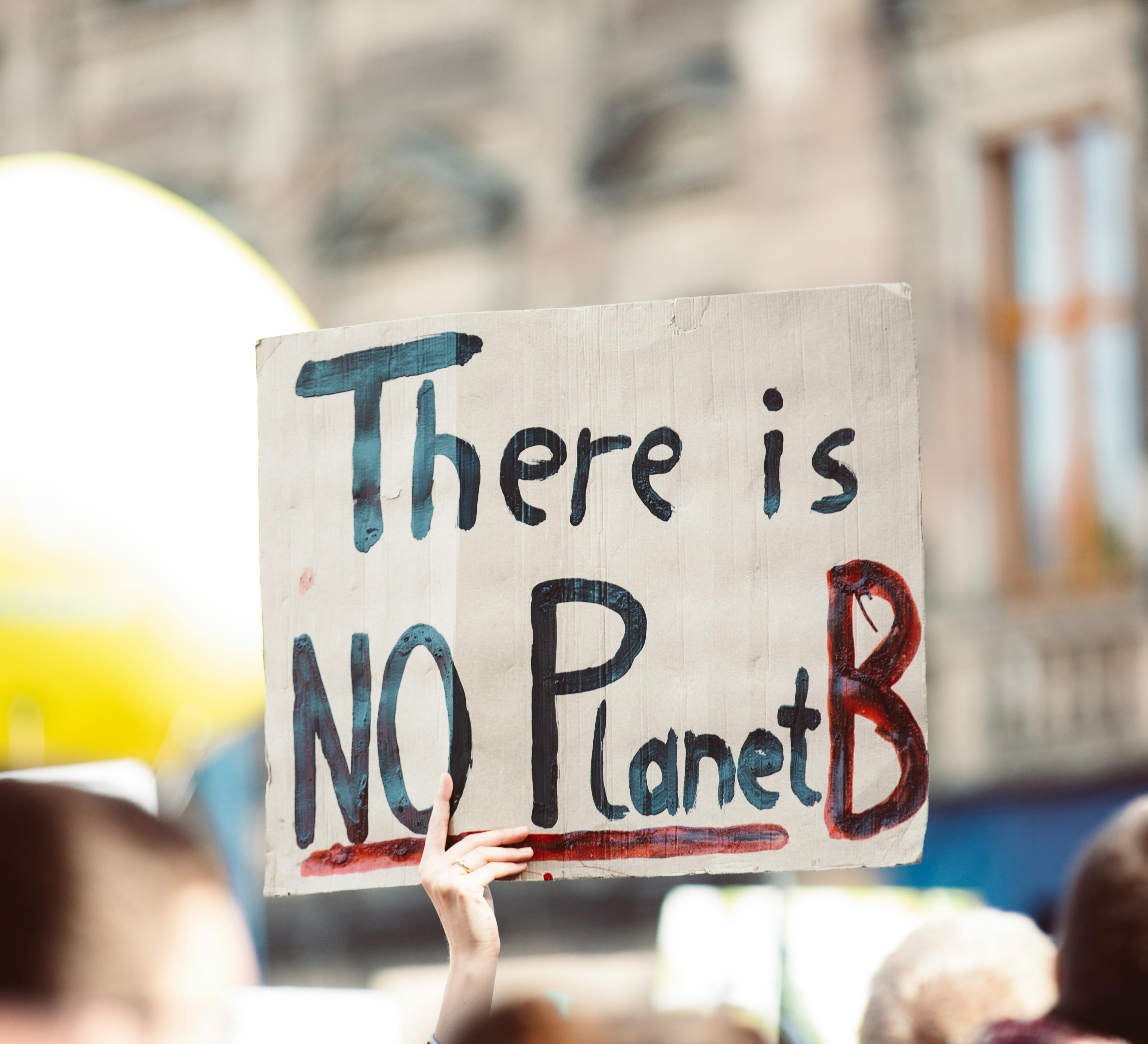
With the continued use of fossil fuels, NOAA has predicted “global temperature will be at least five degrees Fahrenheit warmer than the 1901-1960 average, and possibly as much as 10.2 degrees warmer.” If temperatures don’t go down, sea levels will continue to rise, oceans will get even warmer, and more hurricanes will form and cause more flooding. There are many things to consider when choosing a candidate but there’s little time left to reverse the damage that has already been done to the earth’s climate. Climate change is no longer an existential crisis. It’s real and if we don’t band together to limit the human effects on our climate, it won’t matter which candidate wins.
Alexis Fahey is a staff writer for Blue Muse Magazine
Featured image courtesy of Markus Spiske
0 comments on “The Earth Vote: Climate Disasters and Political Gridlock | Alexis Fahey”